Be bear aware: hiking with bears (and dogs) in Washington
October 26, 2026
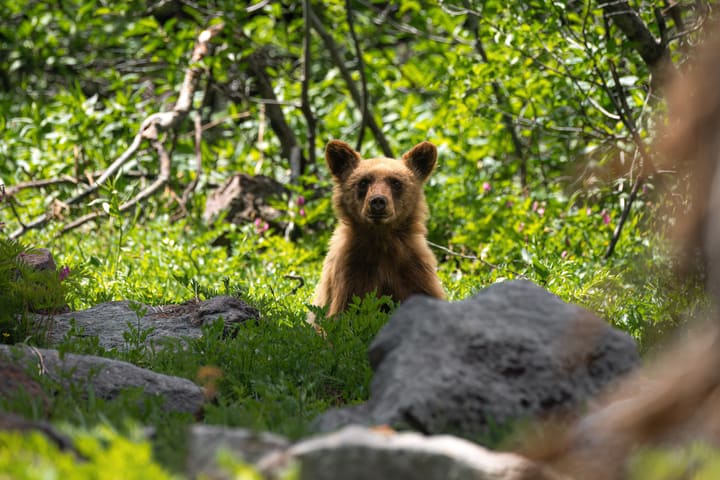
Early Sunday morning, October 25, a black bear knocked a woman down from behind near her home on Index-Galena Road, outside Index, and bit and clawed her before she got inside and called for help. She was walking her leashed dog in her backyard. The Washington Department of Fish and Wildlife (WDFW) says her injuries are serious but not life-threatening.
Witnesses saw two bears, possibly a mother and a cub. As of Monday, WDFW officers and Snohomish County deputies had not found the bear; a trap is set nearby and patrols are up. WDFW says the woman did nothing to provoke the attack and called it “incredibly rare.” Sultan police note that the area is close to the Lake Serene and Bridal Veil Falls trailheads.
Update, October 28: On Tuesday, October 27, officers found an adult bear and a young bear up a tree behind a business in Index, about 20 minutes after a report of bears digging through garbage cans nearby, with trash under the tree. WDFW killed both bears; state policy requires it to remove bears involved in attacks on people, and the bears will be tested for disease. KING 5 reports they are believed to be the pair from Sunday. The woman was released from the hospital the same day.
Attacks like this are rare, and most bears go out of their way to avoid people. Being bear aware is about keeping it that way, for you, for your dog, and for the bear. A bear that learns to find food near people, or that hurts someone, often has to be moved or killed.
If you see a bear
- Stop. Stay calm, and don’t run.
- If it hasn’t noticed you, back away quietly and give it room.
- If it has, talk in a low, calm voice so it knows you’re a person, and move away slowly, sideways if you can.
- Get your bear spray out. Leash your dog short and keep it quiet. Pick up small children.
- If it keeps coming, stand tall, wave your arms, and get louder.
- If a black bear attacks, fight back. Don’t play dead.
Washington’s two bears
Black bears are the bear you’re likely to meet. WDFW estimates there are about 22,000 in Washington, and they live almost everywhere except the dry Columbia Basin, including suburban greenbelts. Despite the name, they can be black, brown, blond, cinnamon or rust. They usually avoid people, and they’re good tree climbers.
Grizzly bears are rare here. WDFW says they live in the Selkirk Mountains in the northeast corner of the state and are seen once in a while near the Canadian border in northern Stevens and Pend Oreille counties. None has been documented in the North Cascades since 1996.
Color won’t tell them apart: grizzlies range from blond to nearly black. WDFW points to the shape instead. A grizzly has a hump over its shoulders, a face that dips in when seen from the side, and long, curved claws. A black bear has no hump and a straight face profile.
The difference matters most if a bear attacks. The National Park Service (NPS) says to fight back against a black bear and not play dead. For a grizzly, NPS says to play dead: lie flat on your stomach with your pack on and your hands behind your neck, and fight back only if the attack keeps going.
When bears are most active
- Spring (March and April). Bears come out of their dens hungry, before much natural food is up. WDFW’s averages: males come out around mid to late March, females in late March or early April, and mothers with new cubs about a week after that. Early spring is one of the two times bears most often go looking for human food.
- Summer. Bears follow the green-up and then the berries. At Mount Rainier, NPS notes that black bears feed in the Paradise meadows, sometimes close to the trail. A bear with its head in a huckleberry bush may not hear you coming.
- Fall (September to November). Bears eat as much as they can before winter. WDFW names late fall, “as bears prepare for hibernation,” as the other peak time for bears coming near homes, garbage and other food. Sunday’s attack happened in this window.
- Winter. Most bears den. WDFW says denning can be late or broken up where bears find food from people, so a mild day in Western Washington can still bring out a bear.
- Any season: NPS says bears are most active at dawn, dusk and night. Those are the hours to be most alert.
What to bring
- Bear spray, in a holster on your hip belt or chest strap, not inside your pack. Pick one made for bears and registered with the EPA. Human pepper spray is not the same thing. WDFW says spray with 1.3 to 2 percent capsaicin can stop an aggressive bear when sprayed into its face from about 20 to 30 feet.
- A whistle. It’s loud, weighs nothing, and doubles as an emergency signal if you get hurt or lost.
- A non-retractable leash if your dog is with you.
- Your Ten Essentials. Bear safety starts with the same pack as any other hike. See The Ten Essentials.
- A friend or two. NPS notes that groups of three or more are less likely to have a bear encounter, and someone is more likely to spot the bear first.
Bear spray or air horn?
Carry bear spray. If you also want an air horn, carry it in addition to the spray, never instead of it.
Bear spray has the best record. A study of 20 years of bear spray use in Alaska (Smith and others, 2008) found that it stopped a bear’s unwanted behavior in 90 percent of black bear cases and 92 percent of brown bear cases. Of the people who carried it, 98 percent came through close encounters unhurt.
Air horns are a maybe. Parks Canada says an air horn “can be an effective bear deterrent in some circumstances.” It also warns that a loud, sudden noise can make some bears attack, and says to have your spray ready before you use one. The U.S. Fish and Wildlife Service counts air horns as a way to move a bear a short distance. So an air horn can help with a bear that’s still far off. When a bear is close or coming at you, use the spray.
How to use bear spray:
- Practice taking it out of the holster and flipping off the safety until you can do it without looking. A practice can is the safest way to practice.
- When a bear comes close, take the safety off and aim a little low, at the bear’s face, so the spray billows up into it. Spray in short bursts, and spray again if it keeps coming.
- Watch the wind. In the Alaska study, wind cut accuracy in a few cases, and about 1 in 7 users got some of the spray on themselves.
- Spray only at a bear. Bear spray is not a repellent, and NPS and BearWise both say not to spray it on yourself, your tent or your gear.
- Check the expiration date on the can before the season starts.
Bells, whistles and music
Most bears leave once they know a person is coming. The goal is to let them know early, and a few of the usual ways work better than others.
- Your voice works best. Talk with your group, call out “Hey, bear!” and clap at blind corners, over rises, near loud creeks and on windy days. Both NPS and BearWise recommend it.
- Bells don’t do the job. NPS says bears “won’t hear the bells until you’re too close,” and Grand Teton National Park calls bells “often not sufficient.” Call out instead.
- A whistle is a good backup. BearWise lists it with clapping and talking loudly for letting bears know you’re there.
- Leave the earbuds out. You need your ears to hear a bear crashing through brush, a snort, or your dog reacting. BearWise warns that music and phones are distracting.
- A speaker is no substitute. We found no wildlife agency that recommends playing music to keep bears away; they all say to use your voice. A speaker also bothers the people and wildlife you share the trail with.
When you see a bear
Give it room. If the bear hasn’t seen you, back away quietly and keep watching it, or wait for it to move off. Never walk toward a bear for a photo. If you see a cub alone, leave: its mother is close. Never get between a mother and her cubs.
If it has seen you, stop and stay calm. Talk in a low voice so it knows you’re a person and not prey. Move away slowly, sideways if you can, and leave it a way out. Don’t run, since bears can run up to 35 miles an hour (WDFW) and running can set off a chase. Don’t climb a tree, because black bears climb well.
If it comes toward you, stand your ground. Get your bear spray out and take the safety off. Stand tall, raise and wave your arms, and keep talking. If you’re in a group, stand shoulder to shoulder. If it keeps coming, get louder: yell, clap and stomp. WDFW says the more the bear pushes, the more forcefully you should push back.
If it charges, use the spray, and keep standing your ground. Don’t turn and run.
If a black bear makes contact, fight back hard. Use your fists, feet, rocks, sticks, trekking poles, anything you have, and aim at the face and muzzle. If you can get into a car or a building, do it, as the woman near Index did. Don’t play dead with a black bear. Only for a grizzly is the advice to play dead.
Afterward, call 911 if anyone is hurt, then report the encounter to WDFW at 360-902-2936. Near Index, Sultan police take sightings at 425-407-3999 (non-emergency).
Hiking with your dog in bear country
A loose dog can find a bear before you do, bark at it or chase it, and then run back to you with an angry bear right behind. That’s why BearWise and wildlife agencies tell dog owners to keep their dogs leashed every time.
- Leash every time, on a non-retractable leash, even on the short walk to the car or around the yard. Six feet is the common rule; Mount Rainier and many other parks require a leash no longer than that.
- Check whether dogs are allowed at all. Mount Rainier National Park doesn’t allow pets on its trails, except the Pacific Crest Trail on its east side. Each hike’s page here shows the agency’s dog rule when one is known.
- Keep your dog right beside you, not out front where it reaches blind corners and berry patches before you do.
- Never let it bark at, chase or corner a bear. Teach a solid “quiet” and “leave it” at home.
- Skip dawn and dusk where bears have been seen. That includes the first and last walks of the day at home.
- At home, check the yard first. BearWise suggests turning on lights and making noise at the door before you let the dog out, and feeding pets indoors.
If you meet a bear with your dog:
- Shorten the leash right away and keep your dog close and behind you. Pick up a small dog if you can do it calmly.
- Keep it quiet. A barking, lunging dog can turn a curious bear into a defensive one.
- Get your bear spray out, then back away together while talking low to the bear. Same rules: no running.
- If the bear comes at you, spray it. The cloud protects you and your dog.
- If your dog gets into a fight with a bear, don’t try to pull it out. BearWise is clear that you will get hurt. Use bear spray if you can do it safely.
- Afterward, have a vet check your dog, even if the wounds look small, and report the encounter to WDFW.
Keep bears wild
Most bear trouble starts with food. A bear that finds food once around people comes back, gets bolder, and ends up in trouble with people. That’s how it ended in Index: two days after the attack, the mother and cub were found in a tree above garbage they had raided, and both were killed. In Washington it’s against the law to feed bears or leave food out for them, even by accident; WDFW says the fine can be up to $1,025.
- Pack out every scrap, including fruit peels and wrappers.
- Don’t leave food or coolers where a bear can see or smell them at the trailhead.
- At home in the fall, put away garbage, pet and livestock food, bird feeders and grills, as WDFW asks after Sunday’s attack. Pick up fallen fruit.
- Never feed a bear or walk toward one for a photo. Keep your distance.
Before you head out, check the trail’s page here for hiker reports. Hikers post what they saw at the trailhead, and that sometimes includes a bear.
Sources and further reading
- Washington Department of Fish and Wildlife. “Human-black bear incident in Snohomish County.” October 25, 2026, updated October 27. The Index attack, the two bears removed on October 27, and WDFW’s safety tips.
- KING 5. “Adult black bear suspected in rural Snohomish County attack, cub euthanized in Index.” October 2026.
- The Everett Herald. “Woman injured in bear attack Sunday morning near Index.” October 26, 2026. The search, the trap, and the nearby trailheads.
- KOMO News. “Woman injured in bear attack in Snohomish County.” WDFW’s comments on how rare this is.
- Washington Department of Fish and Wildlife. Black bear and Grizzly bear. Numbers, range, colors, how to tell them apart, encounters, and bear spray.
- Washington Department of Fish and Wildlife. Black bear questions and answers (2022). When bears come out of their dens.
- National Park Service. “Staying Safe Around Bears” and “Hiking in Bear Country.” Encounters, black bear versus grizzly attacks, bells, groups, and active hours.
- National Park Service. “Recreating in Bear Country.” Grand Teton National Park. Bells versus calling out.
- National Park Service. “Pets.” Mount Rainier National Park. Where dogs are allowed and the leash rule.
- U.S. Forest Service. “Bears.” Know Before You Go.
- BearWise. “Dogs and Bears” and “Tips to Avoid Bear Encounters.” Leashes, noise, earbuds, and dog fights.
- Smith, T. S., S. Herrero, T. D. DeBruyn and J. M. Wilder. “Efficacy of Bear Deterrent Spray in Alaska.” Journal of Wildlife Management 72(3), 2008.
- Parks Canada. “Bear deterrents.” Air horns and bear spray.
- U.S. Fish and Wildlife Service. Grizzly Bear Hazing Guidance (2020). Air horns.
- Photo: National Park Service / Jake Edwards. “Black bear peeks at camera.” Lassen Volcanic National Park. Public domain.