Hiking in hunting season
October 28, 2026
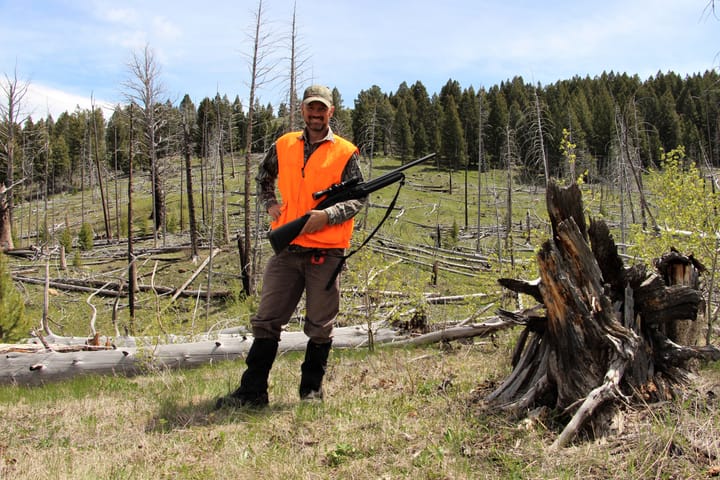
Every fall, hunting season and hiking season overlap. Most of the national forest and state land you hike on in Washington is open to hunting, and November brings the elk rifle seasons and a short late deer season. You don’t have to stay home. Wear something bright, know where and when hunters are out, and you can share the woods safely.
Rifle seasons this fall (2026)
- Elk, western Washington: November 7 to 18.
- Elk, eastern Washington: October 31 to November 8 in most units, and to November 15 in some.
- Deer, western Washington: October 17 to November 1, then a late season November 19 to 22 in many units.
- White-tailed deer, northeast Washington: a late season November 7 to 19.
- Late archery and muzzleloader: from November 25 into mid-December in many units, a few to December 31.
- Forest grouse: September 15 to January 15, statewide.
General seasons from WDFW’s rules. Dates and rules vary by game management unit, and special permit hunts run at other times.
Where hunters are
- National forests are open to hunting. That covers most trails in the Cascades and the Olympics outside the national parks. The Forest Service asks hunters to be alert near trails and developed areas.
- State trust lands managed by the Department of Natural Resources (DNR) are open too: more than 3 million acres, DNR says. Its Natural Resources Conservation Areas allow hunting in remote spots, away from trails and access sites.
- Mount Rainier, Olympic and North Cascades National Parks don’t allow hunting. The two national recreation areas next to North Cascades do: Ross Lake, along State Route 20, and Lake Chelan, around Stehekin. The park closes hunting within about a quarter mile of developed sites and on some trails there, such as Thunder Creek.
- Washington State Parks says hunting and shooting are not allowed on state park land.
- City and county parks set their own rules. Check the park’s page.
Each trailhead page here links to the agency that manages it, so you can tell at a glance whether you’re headed into a national forest, a state park or a national park.
When they’re out
In Washington, deer and elk hunting hours run from half an hour before sunrise to half an hour after sunset, according to WDFW. So hunters are out at first and last light, the same hours many hikers start and finish. In November in Western Washington, that window closes around 5 p.m.
If you’d rather not share a trail with hunters at all, the national parks and state parks are your best bet in November.
What to wear
Washington requires hunters in areas open to modern firearm deer or elk seasons to wear at least 400 square inches of fluorescent orange or fluorescent pink, above the waist and visible from all sides. A hat alone doesn’t count. Hikers don’t have to follow that rule, but it’s the best guide to what hunters are looking for.
- A blaze orange vest or jacket is the simplest choice. A vest fits over any rain shell and weighs a few ounces. Fluorescent pink works too; WDFW notes that pale or pastel pink doesn’t.
- Add an orange hat and a pack cover, so you show from behind as well as from the front.
- Skip white, tan and brown. The Forest Service tells hunters not to wear white or tan during deer season, since a flash of white can look like a deer’s tail. The same goes for white gloves, hats and scarves on hikers.
- Bring a headlamp and use it if you’re out near dusk. See The Ten Essentials.
Your dog
- Put orange on your dog too. A blaze orange vest or bandana makes it easy to tell from a deer or coyote. The Forest Service asks hunters to do the same with their dogs.
- Keep it on a leash and close to you. A dog that runs off after deer or elk can end up far from the trail, where hunters don’t expect anyone.
- Pick hunt-free places if your dog likes to roam, and check the dog rules first: most national park trails don’t allow dogs. Each hike’s page here shows the agency’s dog rule when one is known.
On the trail
- Make yourself heard. Talk with your group or whistle now and then, especially in thick forest. Hunters listen for movement, and a human voice tells them right away that you’re not an animal.
- Stay on the trail. Hunters expect people there, and you’re easier to see.
- If you hear shots nearby, call out in a clear voice so the hunter knows where you are, and keep moving along the trail. Don’t hide or crouch in the brush.
- Say hello. Most hunters are glad to know where other people are.
- Leave hunters to their hunt. Washington law makes it a crime to harass hunters or drive off game to disrupt a lawful hunt.
Before you go
Open the trailhead’s page here. It shows who manages the land, the forecast and sunset time, the snow level, and recent reports from other hikers. Tell someone where you’re going and when you expect to be back, and put the orange vest in the car so it’s there when you need it.
Sources and further reading
- Washington Administrative Code. WAC 220-415-020 (deer general seasons) and WAC 220-415-050 (elk general seasons). The 2026 dates.
- Washington Administrative Code. WAC 220-416-010. Forest grouse season.
- Washington Department of Fish and Wildlife. “Hunter orange and/or hunter pink requirements” and the hunter pink fact sheet.
- Washington Department of Fish and Wildlife. “2026-2027 official hunting hours.”
- U.S. Forest Service. “Hunting.” Know Before You Go. Hunting on national forests, clothing, and dogs.
- Washington Department of Natural Resources. “Where to go, what to do.” Hunting on DNR-managed lands.
- National Park Service. “Hunting: places to go” and North Cascades’ Superintendent’s Compendium. Ross Lake and Lake Chelan National Recreation Areas.
- Washington State Parks. “Park rules and regulations.”
- Revised Code of Washington. RCW 77.15.210. Obstructing the taking of fish, shellfish or wildlife.
- Photo: U.S. Fish and Wildlife Service / Cortez Rohr. “Forest Hunter.” Red Rock Lakes National Wildlife Refuge. Public domain.